01
Conventional flame burners
Localised flame heating can create temperature differences across the vessel and requires slow ramp and soak times.
 Contact us ↗
Unlock the secret tonet carbon zero, lower energy consumption, improved yield, reduced maintenance, heat uniformity, zero thermal shock, improved furnace lifespan.
World leaders in kinetic heat treatment technology, helping growth-minded businesses worldwide achieve more with less energy.
* Verified by the Materials Processing Institute.
01 / THE TECHNOLOGY
TKE brings kinetic heat transfer technology to energy-intensive industrial processes.
The opportunity is to deliver the required process performance with more efficient energy use. SecalTKS connects the technology with the businesses, engineering teams and applications where it can create value.
Every process is different. We start with the operating requirements, examine the existing equipment and agree how performance should be measured before moving towards a trial.
Exceptional gas savings can go hand in hand with reduced maintenance, lower thermal stress and improved yield. Faster cycles can unlock more capacity—or allow suitable sites to consolidate output into fewer operating vessels. Emissions and capacity gains are assessed for each installation.
See how we assess your application ↗Flame-based heating has powered industry since the Industrial Revolution. TKE brings a modern approach to transferring energy into industrial processes.
Localised flame heating can create temperature differences across the vessel and requires slow ramp and soak times.
An energy plume illustrates the molecular bombardment, supporting rapid, uniform heat-up and vastly reduced energy usage.
Illustrative comparison
THE TECHNOLOGY IN ACTION
A compact emitter. A visible energy plume. A striking response from a metal rod. Take a closer look at TKE on the test bench.
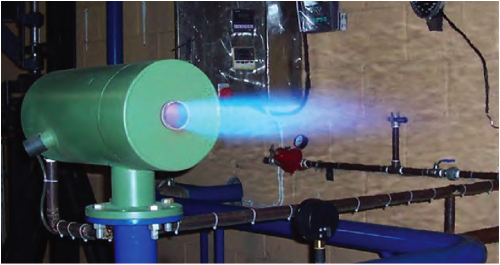
The green cylindrical emitter directs its plume from a small central outlet.
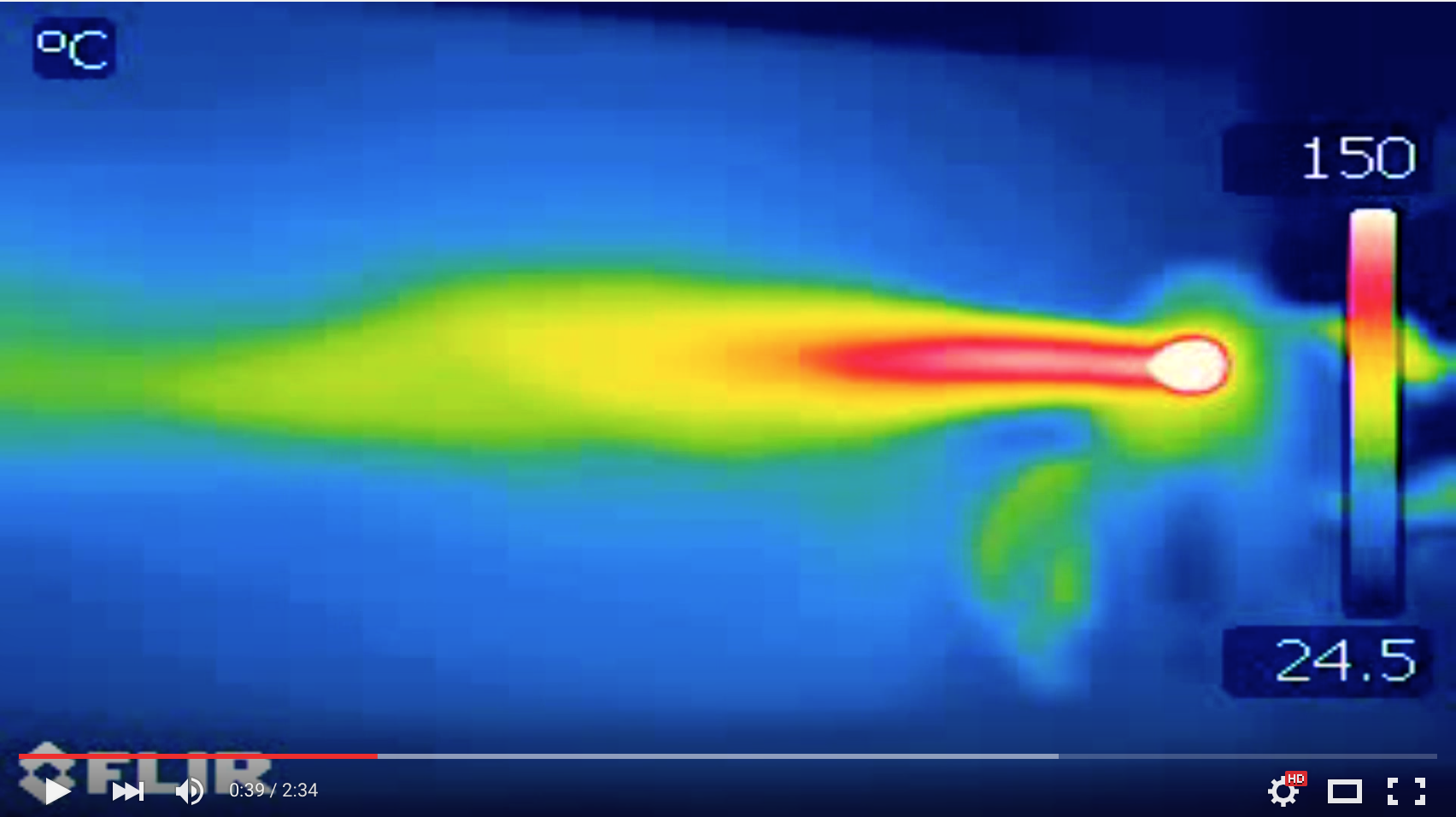
The supplied thermal image uses a scale up to 150°C. This display alone does not establish the plume’s core gas temperature.
A 15-second extract of the supplied welding-rod demonstration, played at its original speed. The rod glows and changes shape in the plume.
THE TKE ADVANTAGE
From energy performance to vessel life, explore the potential of thermal kinetic technology.
Emitter technology delivers thermal energy throughout the vessel.
Fits most existing vessels, often with minimal process adaptation.
Shorter processing times support greater productive output.
Reduced fuel consumption supports proportional reductions in combustion CO₂.
Lower operating temperatures help limit NOₓ formation.
Cleaner operation helps reduce ongoing servicing and rebuild requirements.
Simple controls make day-to-day operation straightforward.
A coordinated route from installation through to commissioning.
Kinetic energy helps de-coke and clean existing furnaces and crucibles.
Reduced thermal stress supports improved lining longevity.
Consistent chamber heating, even with a single unit where suitable.
Hydrogen fuel compatibility offers a route towards future fuel switching.
Reported combustion efficiency; distinct from overall process efficiency.
Gentler, uniform heating reduces the thermal stress associated with direct flame heating.
Flexible billing options help SMEs adopt TKE. Our share-of-savings agreement reduces upfront capital outlay during the early stages of a project.
A reported 20:1 existing-burner-to-TKE positioning ratio, subject to vessel design.
Benefits and performance figures are application-specific and subject to engineering assessment. Combustion efficiency is not overall furnace efficiency; emissions, fuel compatibility and burner replacement ratios depend on the installation.
Highly Commended
Runner-upLow Carbon Industrial Project of the Year
Industries we serve
Our patented thermal kinetic solutions (TKS) can be applied to several core foundation industries.
HEAT TRANSFER, RECONSIDERED
How energy reaches a process matters as much as the temperature it reaches. We assess the opportunity to reduce localised overheating, improve heat transfer and protect your equipment.
At operating temperatures below 1,000°C, TKE helps suppress thermal NOx formation by avoiding extreme flame temperatures. Actual emissions depend on fuel and operating conditions.
An insulating vapour film can impede heat transfer at very hot liquid-contact surfaces—the Leidenfrost or film-boiling regime. Its onset depends on surface temperature, pressure and heat flux. Boiler trials establish the efficiency achievable with TKE.
More even heating and fewer local hot spots can reduce temperature gradients that stress refractory linings. The aim is faster, controlled heat-up with less damage; safe heating rates are agreed for each vessel.
Have a furnace or boiler in mind? Let’s assess the opportunity ↗
FROM BENCH TO VESSEL
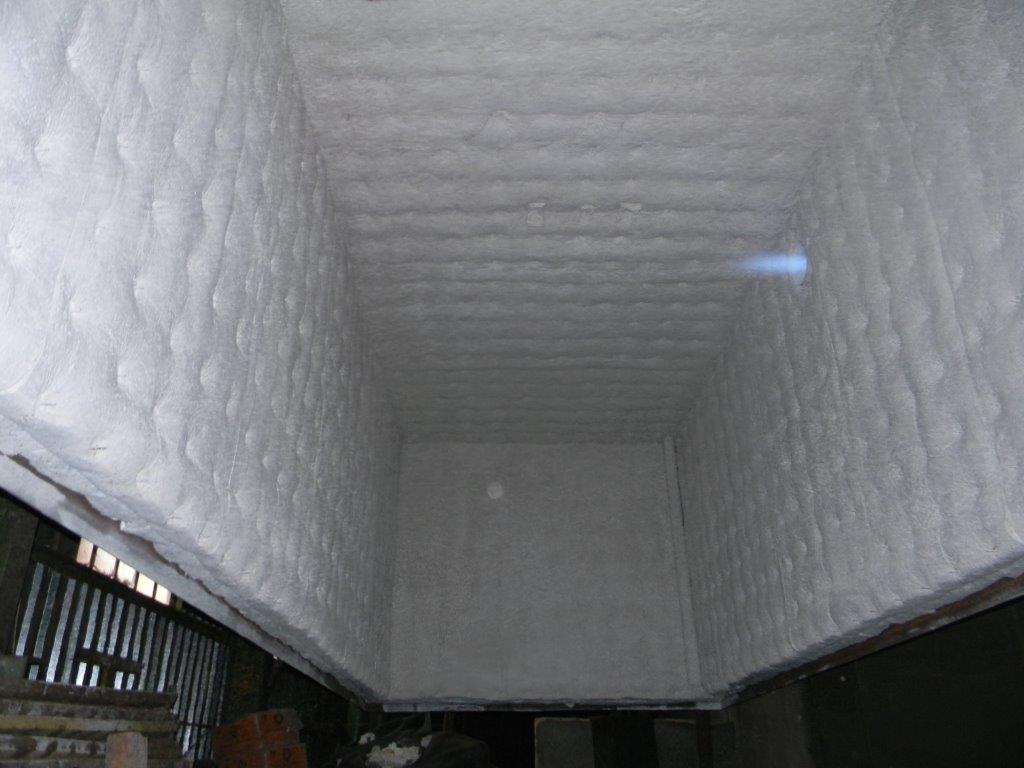
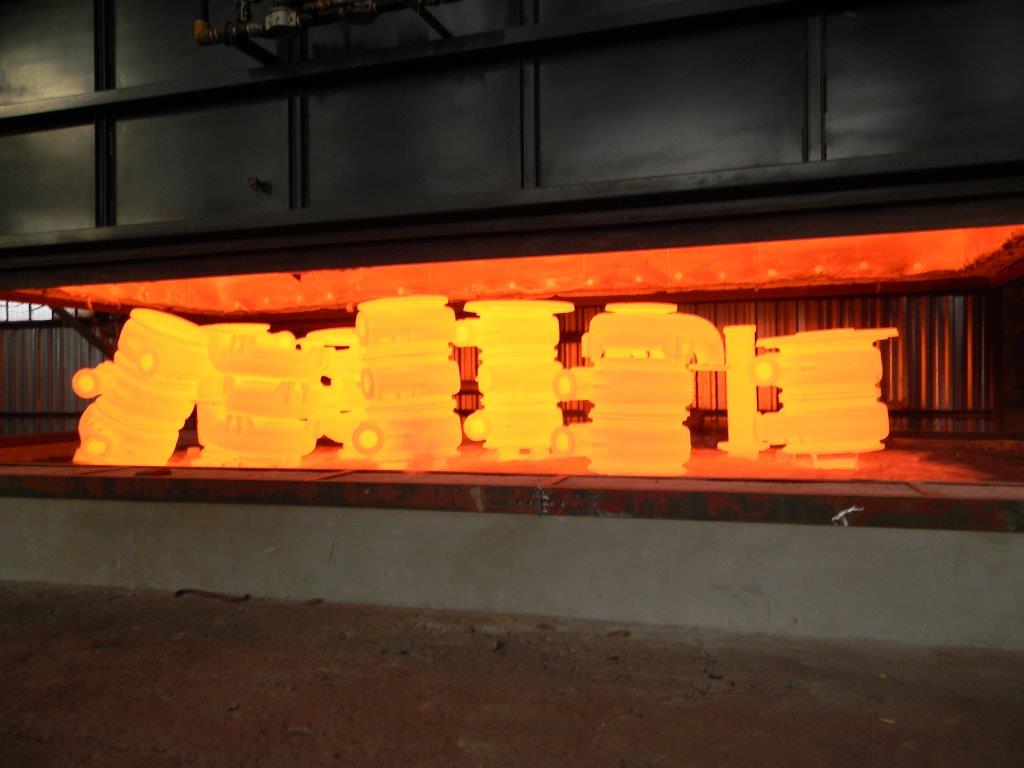
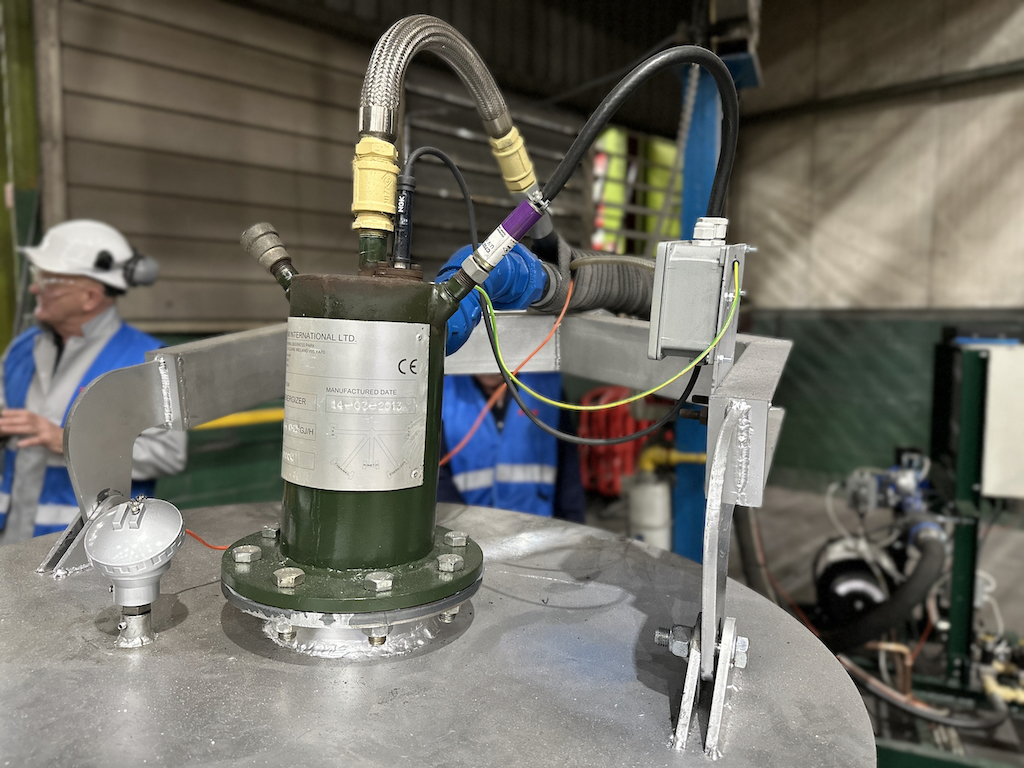
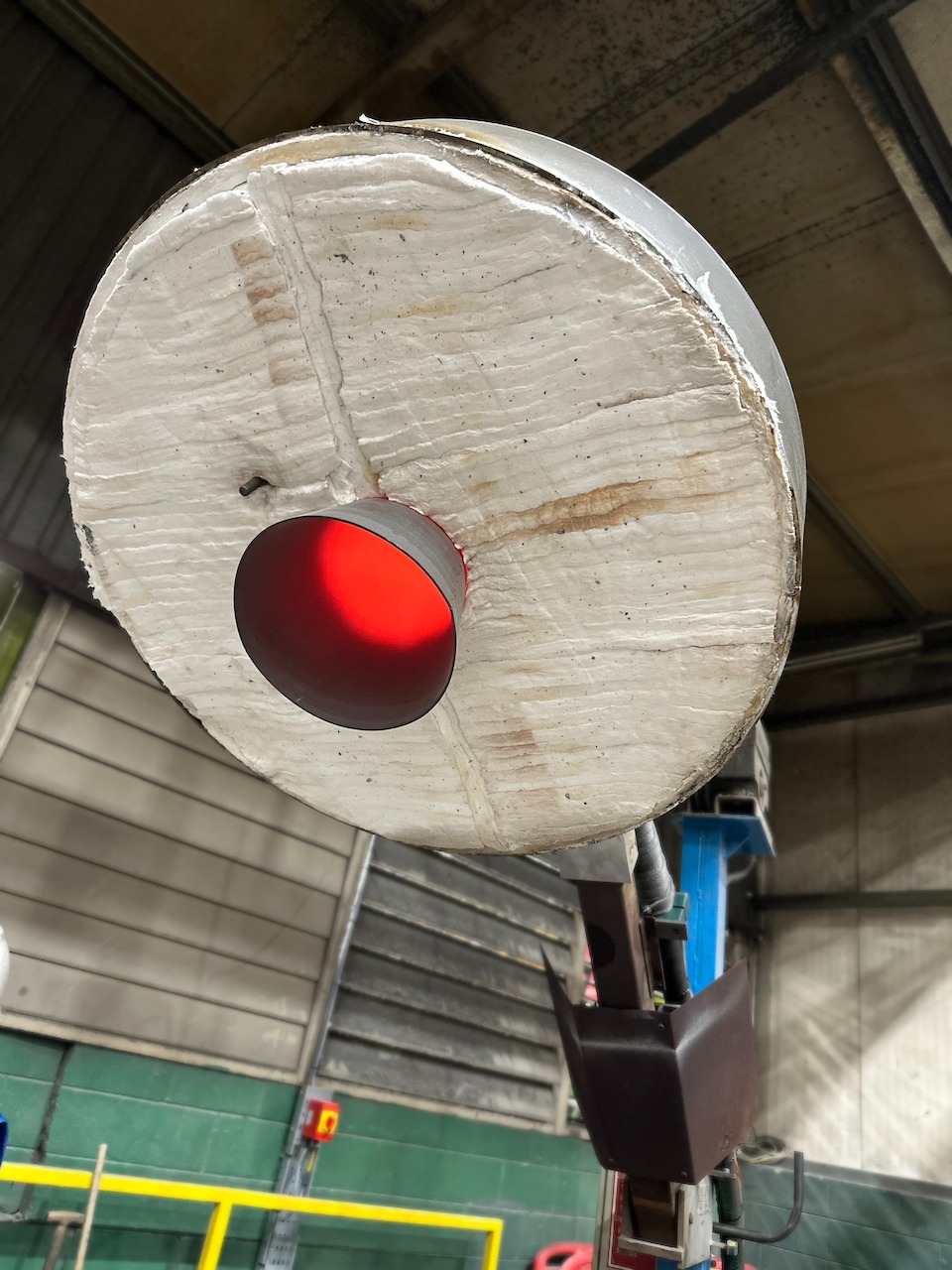
Explore the emitter, furnace chambers and vessel installations from our project photographs.
03 / EVIDENCE & VALIDATION
Carrickfergus, Northern Ireland · Installed August 2023
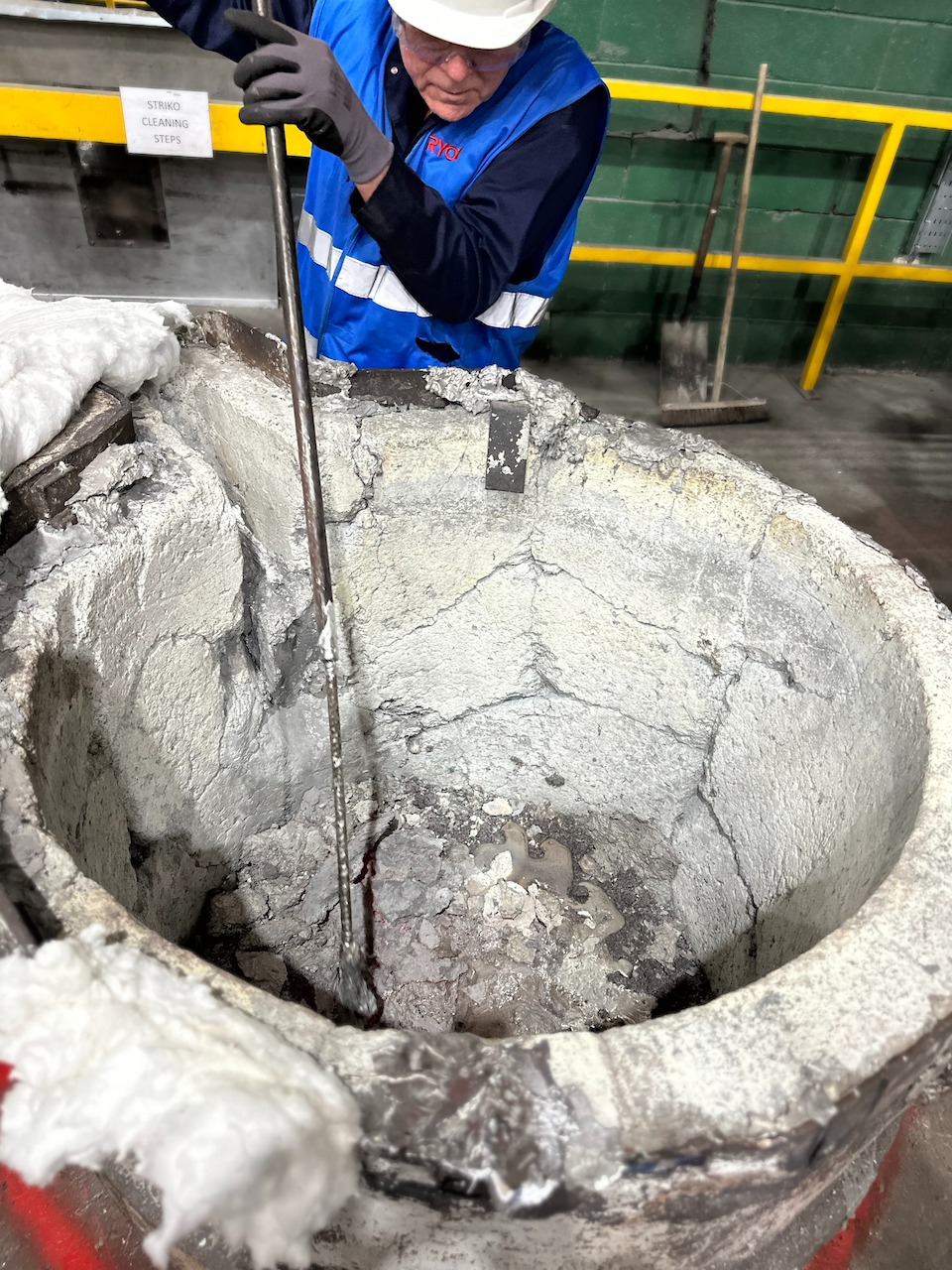
Ryobi Aluminium Castings (UK) Ltd commissioned SecalTKS to replace the conventional burner at its crucible pre-heat station with a TKE kinetic emitter.
A bespoke crucible lid and yoke accommodated the emitter on the existing stand and arm, with a new TKE skid and valve train replacing the previous burner controls. The project aimed to pre-heat crucibles to 500°C.
The presentation also reports reduced dross, easier cleaning of refractory build-up and simple push-button operation.
Discuss your application ↗| Measure | Before | With TKE |
|---|---|---|
| Average gas consumption | 10.70 m³ | 2.62 m³ |
| Average pre-heating time | 59.66 minutes | 23.60 minutes |
Source: SecalTKS Ryobi project presentation, “Project Results”. Figures are reported averages for this installation, not a guarantee for other applications. The presentation does not specify the results measurement period or sample size.
“The equipment has proved to be very reliable and we have not experienced any maintenance issues to date.
In terms of performance, the unit can preheat 850 kg production ladles in less than half the time of our previous unit whilst only using 40% of the gas from the data we have gathered. Additionally, the unit seems to reduce the build-up we have previously experienced on the ladle refractory walls, which makes cleaning and maintenance easier. This can only be good news at a time when energy costs are generally rising and the global push for carbon reduction has never been greater.”
04 / OUR APPROACH
UK-based. Globally focused. We help bring the technology, site requirements and delivery arrangements together.
Review your process, energy use, equipment and operational constraints to identify a suitable opportunity.
Agree the engineering scope, baseline, trial requirements and acceptance criteria with your team.
Measure performance through controlled trials, including safety, quality and commercial outcomes.
Develop site-specific installation plans, operating procedures and agreed service arrangements.
MEASURE. REDUCE. VERIFY.
Start with your own emissions baseline. Understand what you need to reduce—and where a more efficient heating process can make a measurable difference.
Measure direct emissions, purchased energy and relevant value-chain emissions: Scopes 1, 2 and 3. Set a defined base year, boundary and target date.
Using less gas can reduce direct combustion emissions. Compare equivalent output and include any changes in electricity or other energy use to establish the net improvement.
Net zero requires deep emissions reductions and neutralisation of residual emissions with appropriate carbon removals. A fuel saving alone does not make a process or business net zero.
By 2024, the UK had reduced its territorial greenhouse gas emissions by 53% compared with 1990. This national reduction cannot be claimed as an individual company’s saving. Following the steps above helps each business measure its own emissions and verify reductions against its own baseline, case by case.
The UK’s final 2024 statistics report emissions 53% below 1990 levels.
05 / YOUR QUESTIONS
TKE is a compact kinetic heat-transfer technology for industrial heating. SecalTKS works with customers to assess suitable applications and verify performance in their process.
Many existing vessels, furnaces and boilers can be considered for retrofit, often with limited alteration. Mounting, controls, safety systems and process compatibility are reviewed first.
We focus on the six foundation industries: metals, ceramics, glass, cement, bulk chemicals and paper. Suitability depends on the specific heating duty.
Savings of up to 80% have been reported for suitable applications. Your result depends on the baseline, process and operating conditions; we establish it through measured trials.
Shorter heating cycles can improve throughput and vessel availability. A trial checks whether heat-up is the production bottleneck and whether product quality is maintained.
Reported benefits include less build-up and easier cleaning. We assess refractory condition, deposits and maintenance intervals alongside energy performance.
We review the vessel, fuel and air supplies, mounting position, controls and safety interlocks, then agree an installation and commissioning plan with your engineering team.
Costs depend on the application. Options include a fixed-term end-user licence agreement to lease equipment, or a shared-savings agreement with a nominal setup cost and a typical 50/50 split of verified monthly energy savings. Final terms are agreed for each project.
We agree a baseline and measurement plan before a trial, comparing fuel use against equivalent production, temperature targets and operating conditions. Shared-savings calculations follow the agreed contract.
Lower gas use can reduce direct combustion emissions. Net zero requires a business-wide emissions baseline, deep reductions across the relevant scopes, and neutralisation of residual emissions with appropriate removals.
SecalTKS is UK based and works with businesses worldwide. We agree local engineering, installation, commissioning and ongoing support arrangements for each project.
Tell us about your process, vessel dimensions, operating temperatures, fuel consumption, cycle times and production goals. Photographs and equipment specifications help us assess the initial fit.
LET’S EXPLORE WHAT’S POSSIBLE
Put your business on the fast track to more efficient, productive material processing. Explore how TKE can transform your energy use, unlock capacity and move your operation forward.
Prefer email? info@secaltks.com